
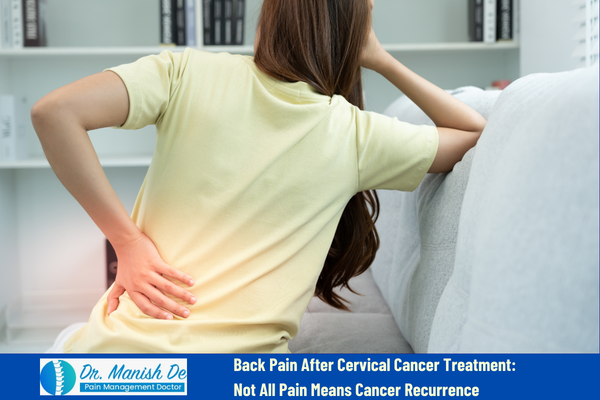
Not All Pain After Cancer Is Cancer: Understanding the Real Cause of Post-Treatment Pain
Cancer survivors often live with a lingering fear—if pain appears again, does it mean the cancer has returned? However, not every pain after cancer treatment is related to the disease itself. Many patients experience pain due to nerve irritation, muscle strain, or treatment-related changes in the body.
A recent case highlights this important reality.
A Patient’s Story: Pain After Cancer Treatment
A 38-year-old woman had successfully completed surgery and chemotherapy for Cervical Cancer. Her reports showed that she was almost cancer-free and recovering well.
However, suddenly she began experiencing severe back pain that affected her daily life. The pain became so intense that:
She could not sit comfortably
Standing became difficult
Walking caused severe discomfort
Naturally, both the patient and her family feared the worst—had the cancer returned?
The Importance of Proper Diagnosis
To determine the exact cause of the pain, doctors performed several advanced diagnostic tests, including:
X-ray
MRI (Magnetic Resonance Imaging)
Contrast-Enhanced MRI (CE-MRI)
Contrast-Enhanced CT Scan (CECT)
These tests are crucial for identifying structural or neurological problems in the spine.
After thorough evaluation, the results revealed an important finding: the pain was not caused by cancer recurrence. Instead, it was due to Neuropathic Pain, a type of pain caused by nerve irritation or damage.
This diagnosis brought immense relief to the patient and her family.
Treatment Approach: Targeting Nerve Pain
Once the cause of the pain was identified, doctors initiated a specialized pain management plan.
The treatment included:
- Local anesthesia-based pain management
- Kenacort injection to reduce inflammation
- Botox injection to relax muscles and reduce nerve irritation
These minimally invasive treatments helped relieve the nerve pain effectively.
Recovery and Improvement
After the treatment, the patient experienced significant relief. Gradually, she was able to:
Walk comfortably
Resume daily activities
Begin exercising again
Her recovery demonstrated that accurate diagnosis and targeted treatment can effectively manage post-cancer pain.
Lifestyle Changes to Prevent Recurring Pain
Medical treatment is only part of recovery. Long-term pain control often requires healthy lifestyle habits.
Doctors recommended several lifestyle modifications:
- Daily exercise for 5–10 minutes
- Regular walking
- Healthy diet and weight control
- Swimming or low-impact physical activity
- Regular medical follow-ups
These simple changes help strengthen muscles, improve spinal health, and reduce the risk of recurring nerve pain.
The Key Message for Cancer Survivors
Experiencing pain after cancer treatment can be frightening, but not every pain signals a cancer recurrence. Many times, the cause may be treatable conditions such as nerve irritation, muscle problems, or post-treatment inflammation.
The most important step is proper medical evaluation and timely treatment. With accurate diagnosis, modern pain management techniques, and lifestyle modifications, patients can return to a healthy and active life.